- Home
- About us
- Services
- Level-4 BRT Solution
- Automated Fare Collection
- Bus Scheduling System
- Fleet Management System
- Integrated Fault Management Solution
- Real-time Funds Management & Reconciliation Solution
- Vehicle Location System
- Asset Management System
- Integrated Passenger Information System
- Complaint Management System
- SLA Management System
- Our Team

Service Level Agreement (SLA) Management System
A centralized digital monitoring and compliance platform designed to track transit service reliability, enforce contractual SLAs, and resolve operational faults across mass transit corridors.
Operations
Key System Capabilities
CMS Integration & Automated Ingestion
Directly integrated with the Complaint Management System (CMS); complaints falling under contractual KPI criteria automatically ingest into the SLA system as actionable operational tickets.
Multi-Line Corridor Tracking
Dedicated filtering and visibility across mass transit corridors (e.g., Orange Line) to keep vendors, transit lines, and field operations coordinated.
Configurable KPI Hierarchy
Structured KPI master setup linking main operational domains (Station Management, ITS Services, Fare System, Station Safety) directly to sub-metrics and contract weights.
End-to-End Fault Resolution
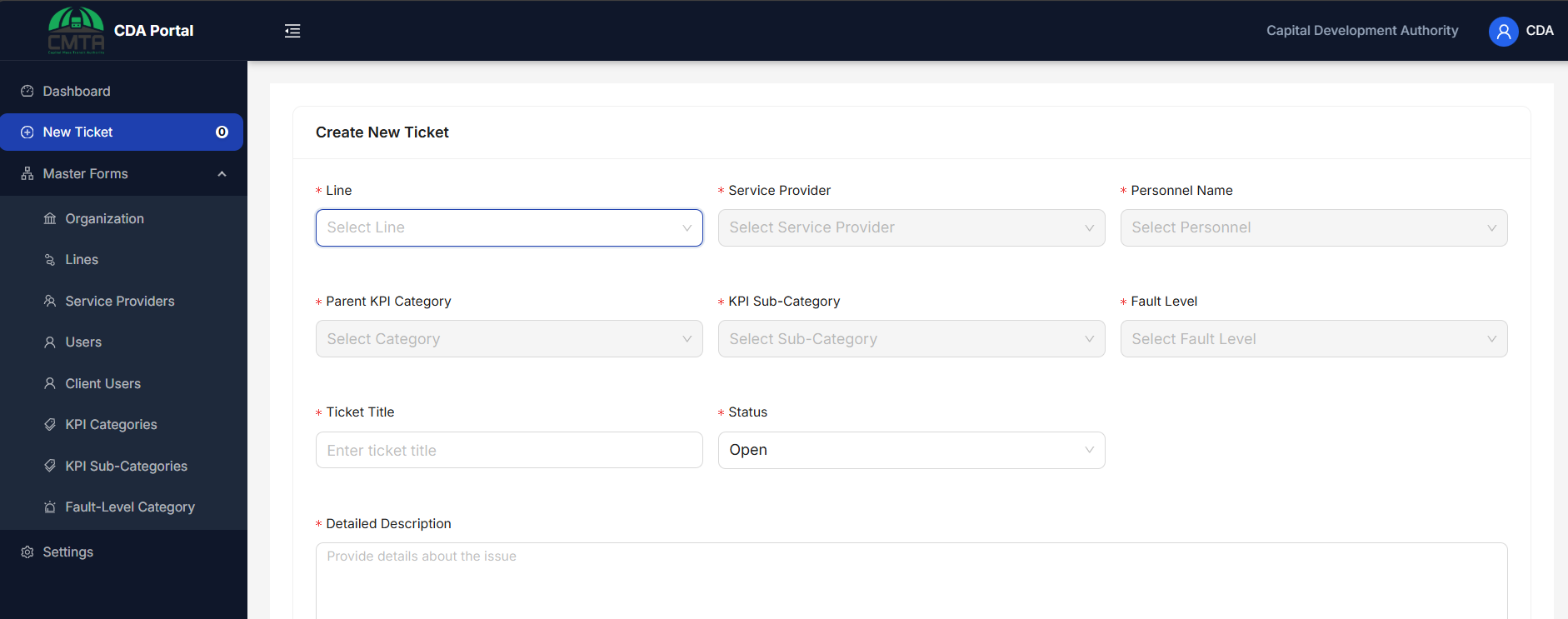
Direct ticket generation workflow with fault-level categorization, automated service provider mapping, personnel dispatching, and evidence attachments.
Contractual SLA Oversight
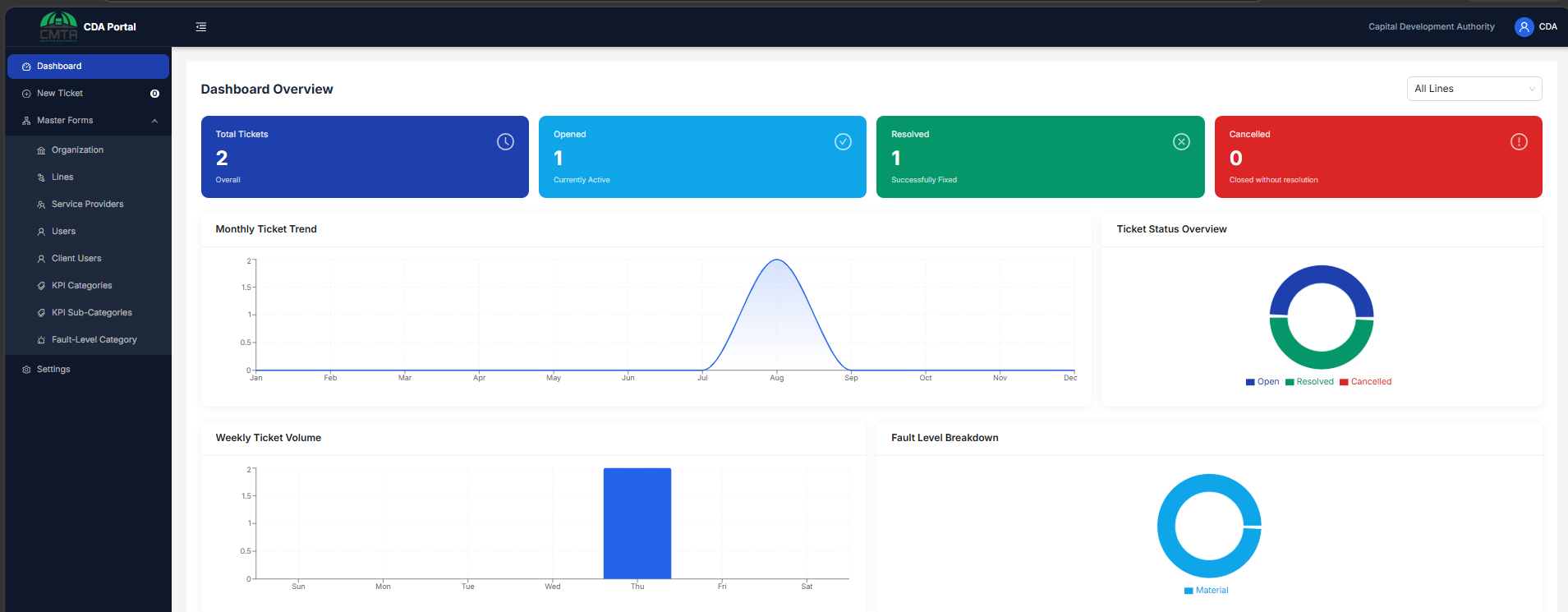
Real-time visibility into open vs. resolved tickets, recurring technical issues, and weekly/monthly performance trends to audit contractor compliance.
Functional Modules Overview
| Module | Functional Scope | Key Parameters & Data Fields |
|---|---|---|
| Executive Dashboard | Live operational health status and executive summary of ticket lifecycle across transit corridors. | Total, Open, Resolved, Cancelled tickets; monthly ticket trend; weekly volume; fault breakdown. |
| Ticket & Fault Management | Dispatch and tracking workflow to log technical/operational faults against responsible vendors (manual entry or CMS auto-sync). | Corridor Line, Service Provider, Field Personnel, KPI Category & Sub-Category, Fault Level, Issue Description, Attachments. |
| KPI Master Configuration | Administrative configuration tying contractual SLA agreements to measurable criteria and weights. | Category Name, Weightage %, Transit Line, Service Provider, Sub-categories (ITS failures, IP Phones, Change management, Station defects). |
| Entity & Master Directory | Access control and master records for all stakeholders across the transit network. | Transit Lines, Service Provider organizations, Client Users, Administrative Users, and Role Permissions. |
Standard Incident Lifecycle
Ingestion & Logging
Issues originate either through manual logging by field supervisors or via automated sync from the CMS (Complaint Management System) whenever a lodged complaint meets KPI breach criteria.
Vendor Allocation
System automatically maps the incident to the designated Service Provider and notifies the assigned field personnel.
Remediation & Closure
Service team resolves the defect; progress and status transitions (Open -> Resolved) are updated with audit evidence.
KPI Auditing
Resolution records feed directly into the central dashboard and monthly trend analytics to evaluate SLA compliance and scorecards.